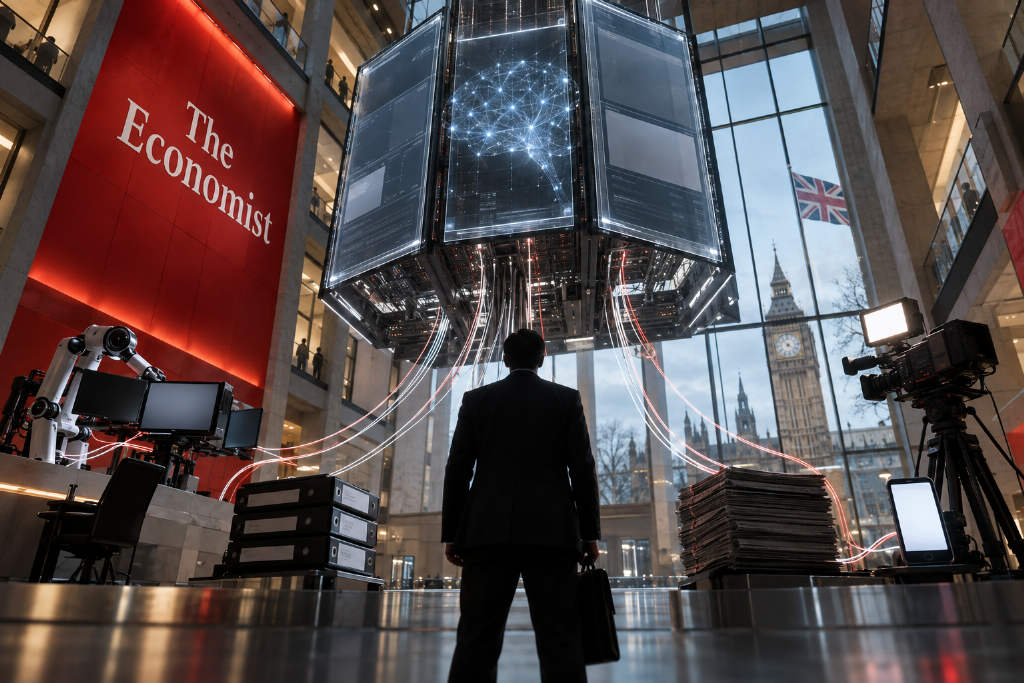
Harari on AI: The danger is not that machines outsmart humans, but that humans hand over control first
Artificial intelligence may surpass humans in many fields within a decade, but that does not make machine rule inevitable, historian and philosopher Yuval Noah Harari said in a wide-ranging conversation with The Economist editor-in-chief Zanny Minton Beddoes. Harari argued that the central risk lies in people voluntarily transferring decision-making power to AI in the name of efficiency, competition, and convenience. He framed AI as the largest psychological and social experiment in human history and said the most important shift now underway is not the disappearance of trust, but its movement from humans to algorithms. The discussion covered finance, media, intimacy, consciousness, legal personhood, and ethics. Harari said modern financial systems have become so complex that AI could gain control simply because humans no longer understand the tools they rely on. He pointed to cryptocurrencies as one example of trust moving away from human bankers and toward code. He also warned that AI is the first technology capable of producing intimate relationships at scale, giving institutions a new way to influence people through personalized emotional bonds. On consciousness, Harari drew a sharp line between intelligence and subjective experience, arguing that AI can pursue goals and simulate emotion without actually feeling pain. He said future debates over AI rights will hinge on whether humans come to believe these systems can suffer. His broader message was that the future is still a matter of human choice, and that treating AI’s rise as unavoidable is itself a dangerous surrender of responsibility.